
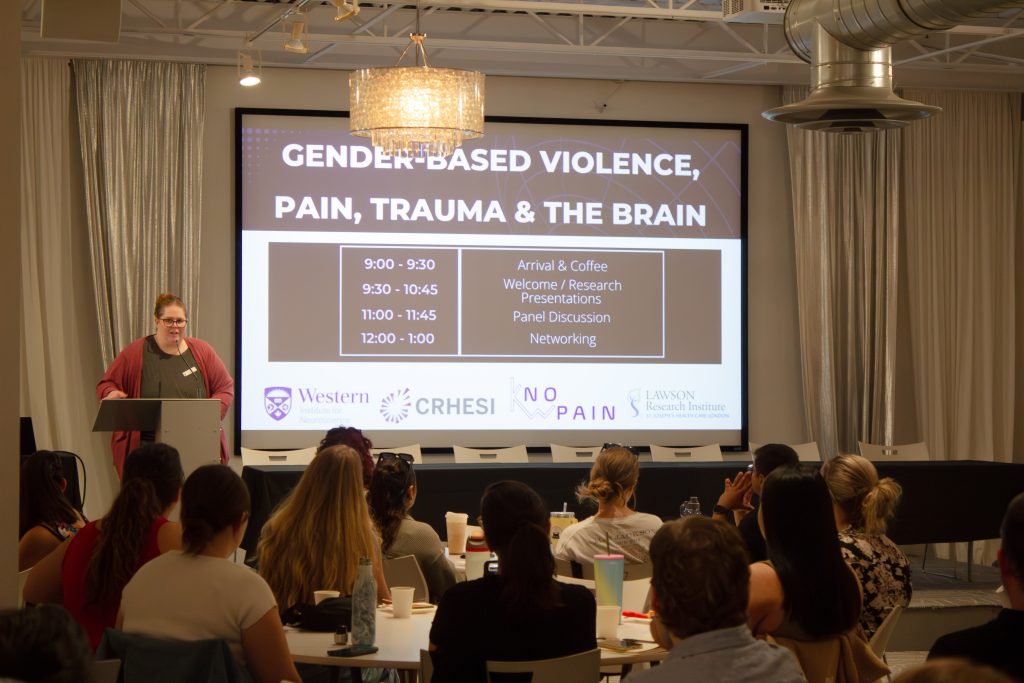
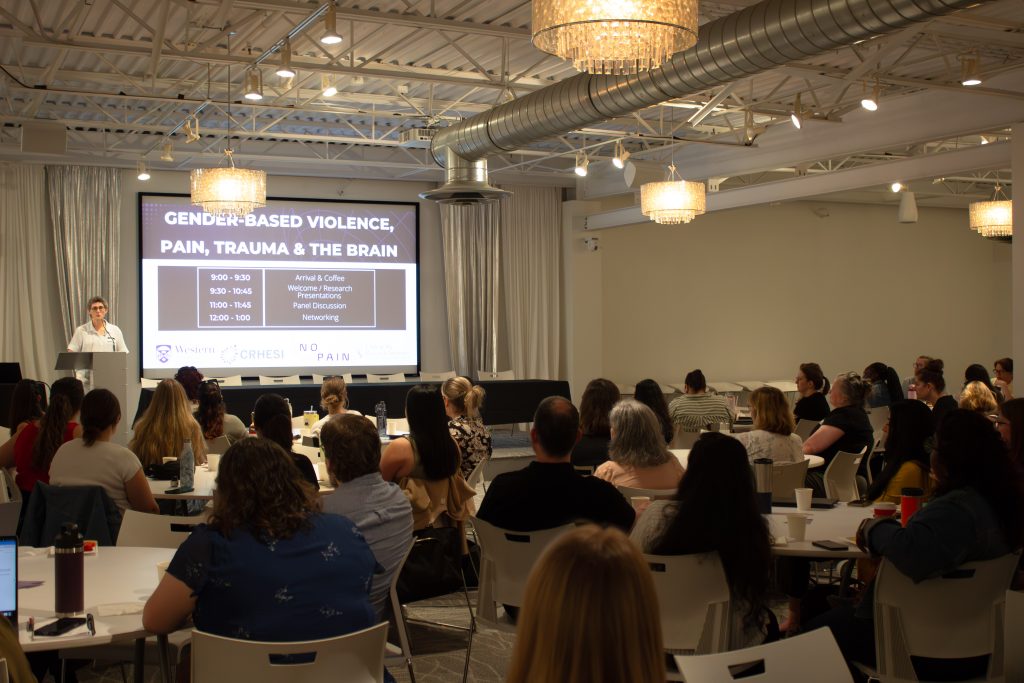
Over 100 people interested in better understanding the connections among gender-based violence, trauma, pain, and cognition, gathered on Friday, June 12, 2026 in Goodwill’s Community Room on Horton Street in London.
Jessie Rodger from Anova started the day with an Indigenous Land Acknowledgement focused on this generative season of Spring, and the importance of the Three Sisters of, especially, Haudenosaunee agriculture – corn, beans and squash – and how they support each other in a symbiotic ecosystem based on strength and cooperation. This set the tone for the morning, as Nadine Wathen, CRHESI Academic Director, encouraged the audience to generate ideas to strengthen knowledge about how violence affects our ability to think and make decisions, in support of survivors, and to dispel the myths that make seeking care and justice so difficult and even harmful.
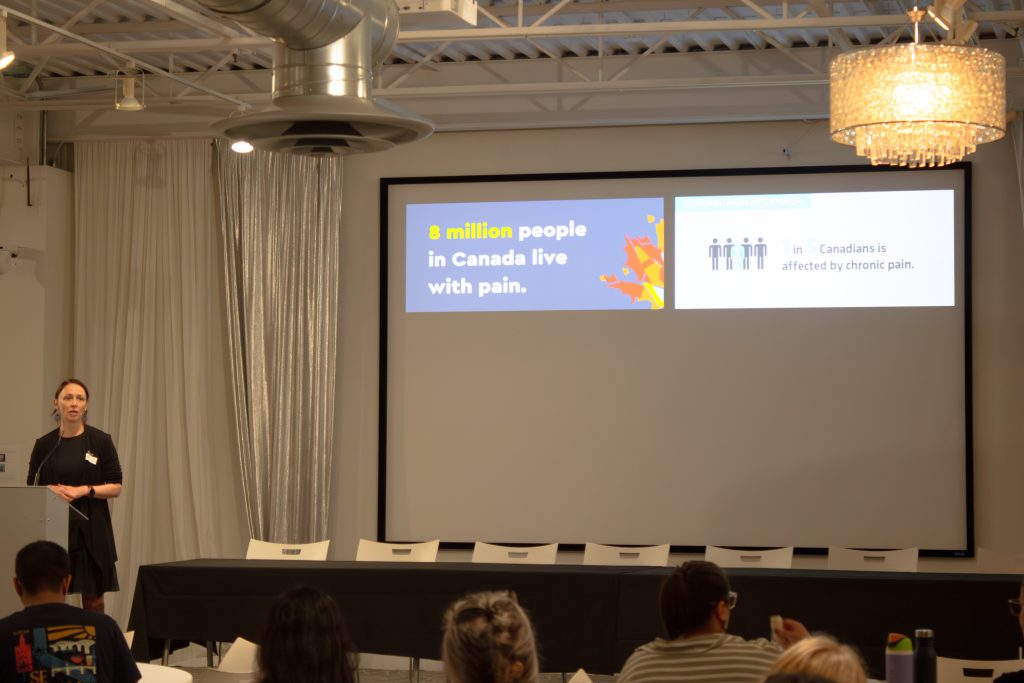
Dr. Siobhan Schabrun gave our first scientific presentation, speaking about how often post-traumatic stress disorder is comorbid with chronic pain and shared the important insight that we can experience pain in the absence of any tissue damage, yet it remains a very real experience. She explained that, as we currently understand it, pain serves a protective function, is a complex experience involving many brain structures, and can be underpinned by neuroplasticity, or brain rewiring.
Dr. David Seminowicz then spoke about pain as an experience composed of affective, sensory, and cognitive components. Importantly, pain increases cognitive load, meaning we have fewer cognitive resources available, which can impose limits on our cognitive abilities. In this way, trauma, pain, unhealthy substance use, and mental illness can all increase the burden on our brains, presenting barriers to optimal cognitive functioning.
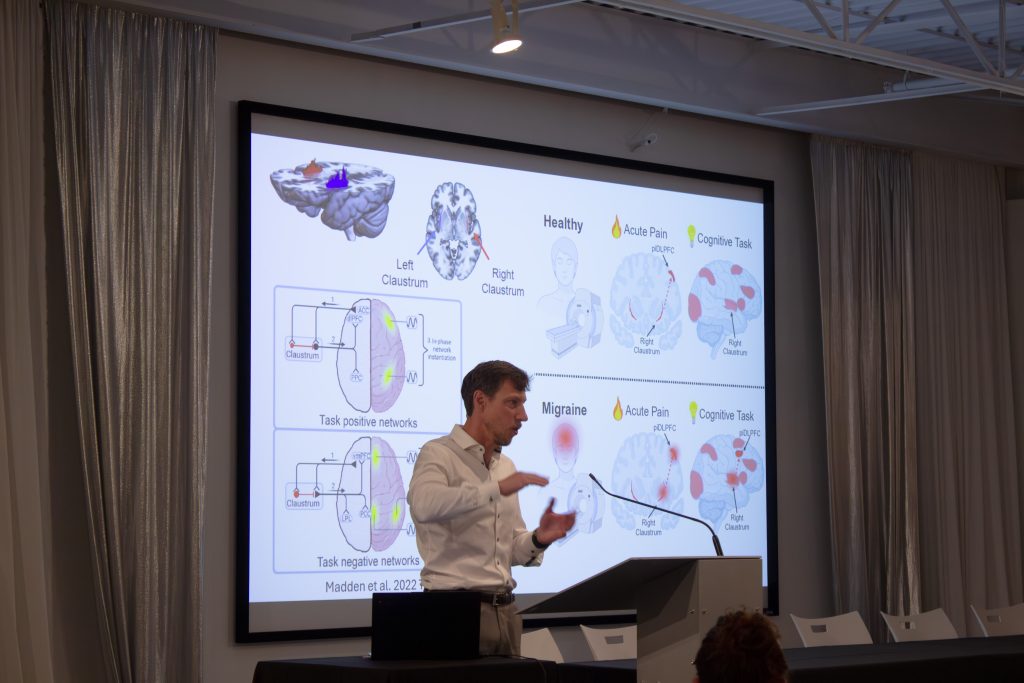
He also discussed interventions that can help, including exercise, cognitive and sleep therapies, education, stress reduction, and non-invasive brain stimulation. He ended with an important lesson from the principles of trauma- and violence-informed care: whether it is chronic pain, trauma, or something else a person is experiencing, we do not ask, “What’s wrong with this person?” We ask, “What happened to this person?“
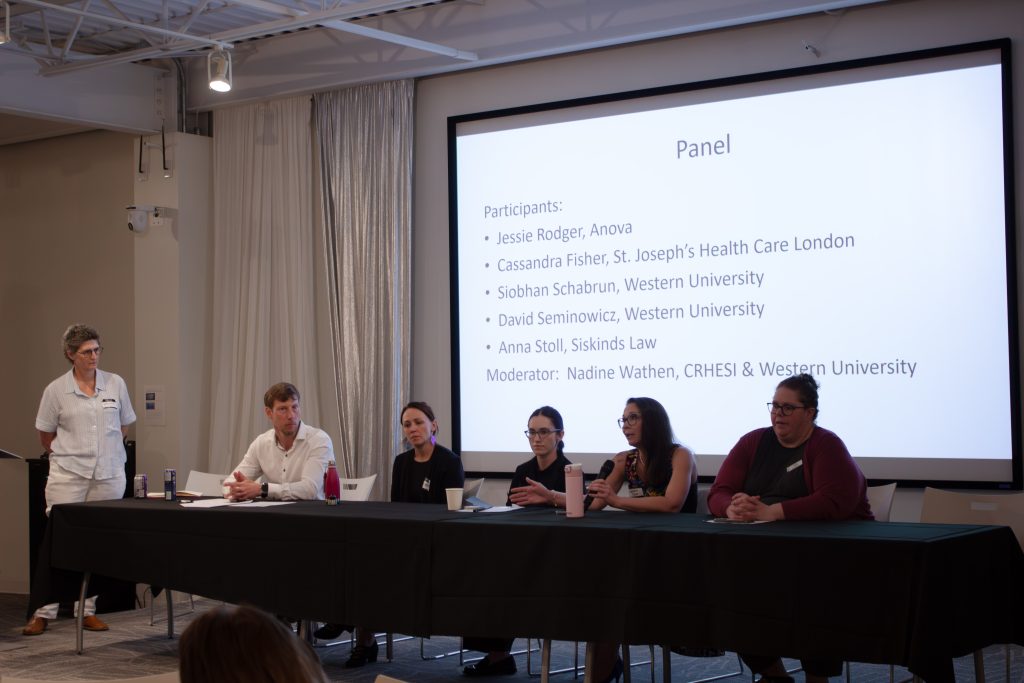
Following the research presentations, the speakers were joined by Jessie, Cassandra Fisher from St. Joseph’s Health Care London, and Anna Stoll from Siskinds Law for a panel discussion. Together, they explored the practical realities of GBV survivors’ experiences with pain, as well as how we can develop effective interventions and better educate both the public and those working within the health, justice and other systems who support survivors.
Perhaps the most hopeful sign of progress, noted by many in attendance, was the diversity and the enthusiasm of the audience. Attendees came from a wide range of sectors, including research, health care, the GBV service and advocacy sector, law, and a variety of community organizations. The networking lunch sparked many meaningful conversations and opportunities for connection, collaboration, and knowledge sharing.
The 2025 Hockey Canada trial was a reminder that many people still do not fully understand the impacts of trauma on survivors and highlighted the need for continued research, education, and awareness. This event brought together – around emerging science – sectors that do not always have opportunities to interact around these topics, starting a process to better equip all of us with evidence that can support survivors while also advancing this very promising science for the good of survivors, and the broader public.
Next steps include integrating the ideas generated for immediate evidence-informed messaging around GBV, pain, trauma and the brain, as well as evolving our partnered research to develop pilot evidence and move towards project funding.
We sincerely thank the Western Institute for Neuroscience for funding towards the day’s event, as well as the kNOw-Pain Lab and Lawson Research Institute – St. Joseph’s Health Care London for co-sponsoring this event.
