
Mohammad Abdalreza Zadeh, Emily Dobrich, Ashley McKeown, Salsabela Razaq, Shokoufeh Modanloo
Universities in Canada bring together diverse students, faculty members, and staff from around the globe to develop knowledge and skills for new generations. They are not only sites of knowledge production but also places to live together, where we share food, housing, workspaces, cultures, hobbies, and our ways of being.
Many of us have packed our lives into a few suitcases and left our home countries to build a home in Canada alongside Indigenous peoples and older immigrant communities. Our bodies have moved across different geographies and now meet in universities shaped by global interconnectedness, ongoing conflicts, and social injustices unfolding both far away and close to home. You walk downtown and see many people sleeping rough on the streets. You may feel isolated, face food insecurity, or struggle with uncertainty in daily life. At the same time, inside you, conflicts from elsewhere in the world come alive, whether in Ukraine, Afghanistan, Lebanon, Russia, Israel, Yemen, Sudan, Palestine, Syria, Iraq, or Iran. Your loved ones may not even have internet access to communicate with you. Their lives may be under threat from their own regimes, outside invasions, or both.
Scrolling through social media and news during the day or night keeps you connected to ongoing and shifting conflicts around the world. What builds up is a mix of emotions, including anger, sadness, hope, hate, revenge, ignorance, disempowerment, and more, that all live in our bodies. You walk on campus, and everyone seems to be doing “business as usual,” but your mind is overwhelmed, and your heart feels scattered across geographies of pain, from downtown streets to the so-called Middle East (colonial, politicized terminology for West Asia) and beyond. These moments of dissonance are hard to navigate and make sense of.
Meeting people with different worldviews, political perspectives, and nationalities can also trigger strong emotions for you and for others. Where segregation, polarization, and hate take root, we forget our shared humanity. We forget that we can also celebrate differences and create safe environments to build empathy and real critical thinking about a world full of uncertainty and fear.
Arts-based methods and activities have been gaining attention for their support of community building, healing, and improving equity and inclusion in research and advocay work. There are also various ways in which engaging in arts-based activities may contribute to improved mental health and well-being.
Inspired by community-based creative models like Art Hives (https://arthives.org/) and collective letter-writing initiatives such as Dearest Scotland (https://www.youtube.com/watch?v=jsx6EJibKcs) , on April 30, 2026, we organized a community event for members of the Western University community to come together and engage in art-based activities to build solidarity and support one another amid heightened geopolitical tensions. Our event brought together members of the university community from across faculties to engage in art-based activities and have meaningful conversations. This was a collaborative event that was facilitated by the Decolonization, Anti-Racism, and Anti-Oppression (DARAO) Committee within the Arthur Labatt Family School of Nursing.
Students, faculty, and staff had the opportunity to step away from the demands of academia to find a quiet moment to pause, reflect, and connect. There was no pressure to find the “perfect” words; instead, tables were filled with creative materials to engage in various forms of creative expression, such as writing poems, sketching, coloring, painting, or simply being present alongside peers and colleagues. (Figure 1)
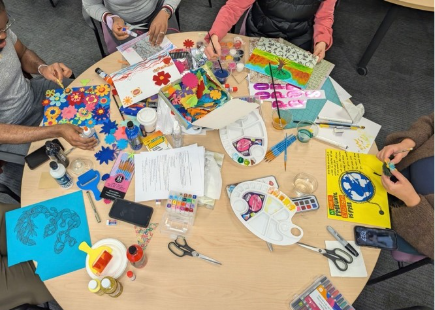
Figure1. Students and faculty at the event creating arts
Listening to and holding space for different perspectives is difficult but an important part of this work. Our experience organizing and participating in this event has left us with deep reflections on what it truly means to build and support diverse communities during times of geopolitical tension and global unrest, when media and propaganda might divide us more than ever. Throughout our discussions, we noticed that differing viewpoints exist not only on global issues themselves, but on how we should even approach these conversations, which can inadvertently separate us rather than bring us together. It is certainly something to consider when trying to build trusting relationships.
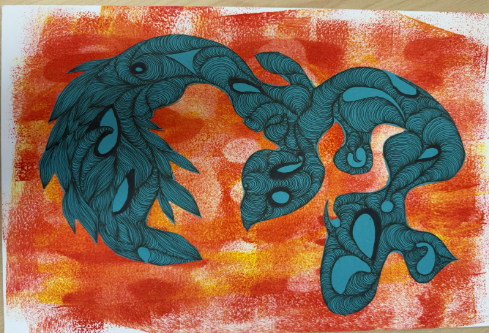
While oppressive structures exploit polarization, building spaces of mutual care and solidarity becomes critical, especially on university campuses. How can we create caring spaces where we can rebuild trust and connection, take care of each other, process mixed feelings and emotional turmoil, humanize relationships, and mobilize our collective actions? Below is a visual glimpse into our shared journey towards healing and connection. We invite you to explore some of the beautiful pieces of artwork and reflections created by our community members during the gathering.
We developed the following prompts to help start critical thinking and reflection:
- What hopes, fears, griefs, or solidarities do you want to express?
- What message would you send to those living through violence, silence, or erasure?
- What moral dilemmas has this moment raised for you?
- How has your moral compass been challenged or clarified?
- As an ally, how do you show up with care, humility, and connection
No one is free until everyone is free
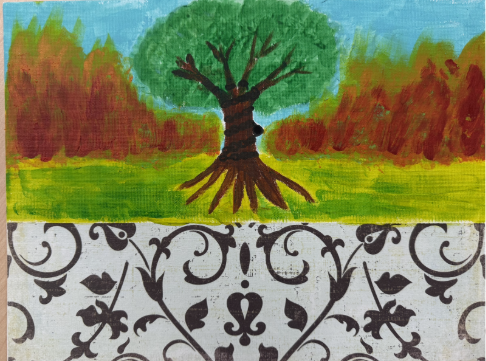
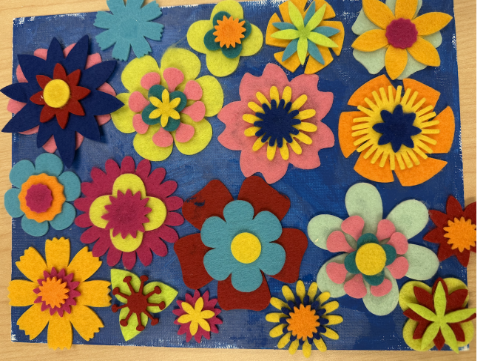
Nothing but kindness
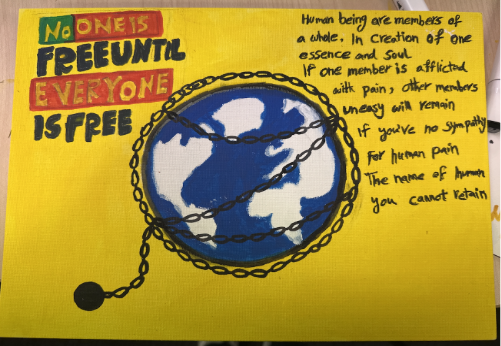
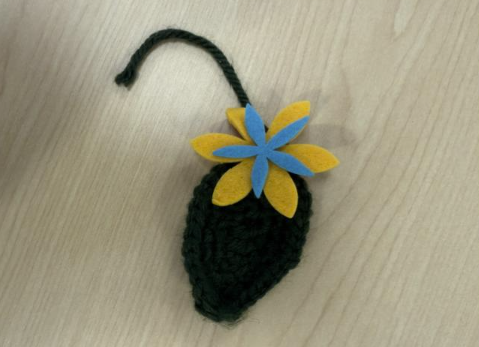
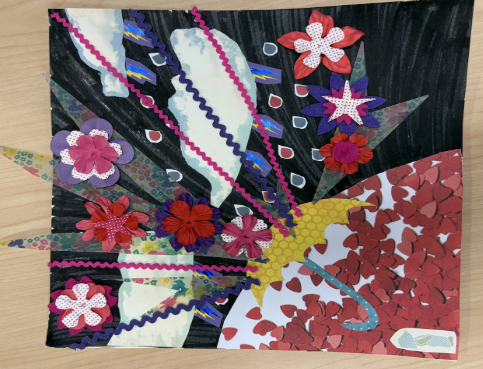
The artworks and reflections shared during the gathering hold traces of what it means to live, study, and work in a time shaped by overlapping crises. They reveal a shared desire to be heard, to remain in relation, and to hold complexity without turning away from one another.
As a closing reflection, this gathering highlights the importance of developing safe, creative, and sustained third spaces in universities where people can step outside institutional roles and dominant narratives and simply be present with one another. In these spaces, difference does not need to be resolved or reduced; instead, it can be held with care, allowing for listening, expression, and mutual recognition without the expectation of agreement. Such spaces matter because they interrupt patterns of polarization and silence, offering a slower and more human rhythm of engagement. They make room for emotions, uncertainty, and multiple truths to coexist while sustaining connection. In contexts shaped by geopolitical tension and social fragmentation, these spaces become essential for rebuilding trust and reimagining how we live and learn together.
We offer this as a reminder: solidarity is not a fixed outcome, but an ongoing practice of staying connected across differences, especially when it is most difficult to do so.